
Supporting safe and ethical swarm removal
At Braintree Beekeepers we promote responsible beekeeping through quick and expert swarm removal, emphasising community care and sustainable practices.
Find clear guidance below on recognising honeybee swarms, contacting your local experts, and ensuring safe removal to protect both bees and your community.
If you see a swarm of honeybees, don’t worry – we can help.
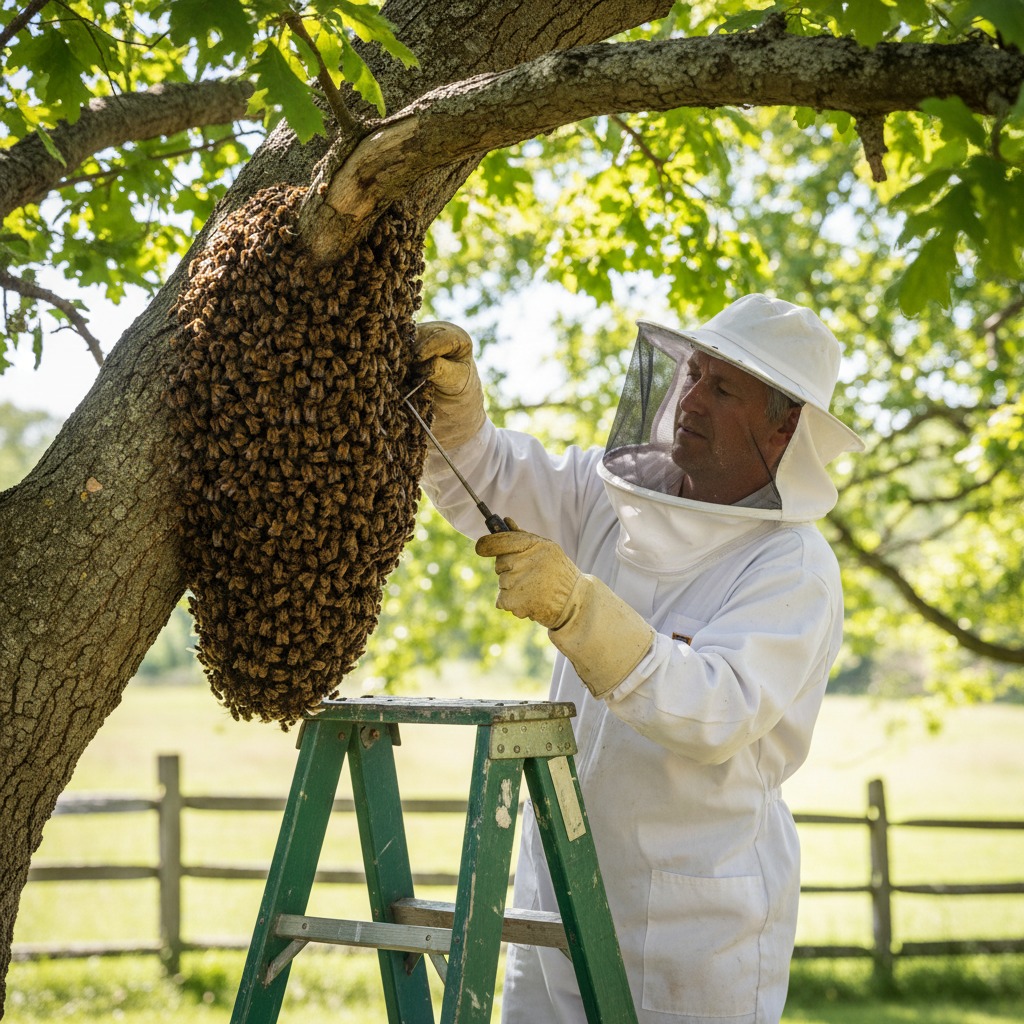
Swarm removal in easy steps
Follow these clear instructions for safe, honeybee removal by local beekeepers so that we can help ensure your safety and look after the bees.

Step One: Identifying Honeybee Swarms
Learn below how to recognise honeybees and distinguish them from wasps, hornets, and bumble bees to ensure proper handling.

Step Two: Contacting the Coordinator
Reach out to Braintree Beekeepers’ swarm coordinator for our ethical removal services and advice on responsible bee management.

Step Three: Ethical Removal Process
Discover how our team safely collects swarms, promoting local bee conservation and supporting responsible beekeeping practices.
Frequently asked questions (FAQs)
Using our clear answers to common questions below you will be able to: confirm whether you have seen a honeybee swarm, understand how we can help, know how to contact our local experts and ensure the safe removal of the bees.

What distinguishes honeybees from wasps or hornets?
Honeybees have a fuzzy or hairy appearance with golden-brown stripes, unlike the smooth, bright yellow and black markings of wasps and hornets.
Could it be a swarm of bumble bees?
Like wasps, bumble bees don’t divide their colonies and move to a new location in a large buzzing cloud like honeybees do. However, you may see a few (20 to 30) harmless males buzzing near a nest waiting to mate with new queens.
Who should I contact for swarm removal in North Essex?
Reach out to the Braintree Beekeepers’ swarm coordinator for professional and ethical swarm removal services using the contact details below.
Do you charge for swarm removal?
Although this is a voluntary service, our beekeepers do incur costs for petrol and so a modest charge may be made depending on the distance travelled. Any charges will be confirmed before the beekeeper visits.
Is it safe to handle a honeybee swarm myself?
Once they have settled, a honeybee swarm looks like a large, living (sometimes buzzing), brown or gold-coloured cluster of bees often clinging to a tree branch, or other structure. Although they are usually calm at this stage, it’s best to leave swarm removal to trained beekeepers to avoid harm to yourself and the bees.
How quickly should I report a swarm sighting?
Notify our swarm coordinator as soon as possible to ensure prompt and responsible removal as swarms can sometimes move on after only a few hours.
What areas do you cover for swarm removal?
Our services are centred in Braintree, North Essex and the surrounding communities, where a team of experienced beekeepers is ready to assist you.
Do you collect swarms wherever they are?
No. Our beekeepers are only authorised and insured to collect Honey Bee swarms and only when the swarm is less than 2 metres from the ground – If you have bees which are actively nesting in your building, please see the advice from the British Beekeepers’ Association (BBKA).
Do you relocate the bees after removal?
Yes, we ethically relocate swarms to safe, managed environments, supporting responsible and sustainable beekeeping practices.
What should I do if I have bees in my building?
If you have a honeybee swarm or established colony that is high up or in a building, contact Sam Pilgrim at East of England Pest Control on 07795 182110 for advice and a quote to remove the bees.
We can help
Please call Adrian Jones, the swarm coordinator for Braintree Beekeepers.

07771 985271
Ensure to provide details about the swarm location and any relevant information to facilitate quick assistance.