Start your beekeeping journey with confidence
Explore essential insights and practical step-by-step advice tailored for new beekeepers eager to start successfully. We take you through the key decisions in your first year of beekeeping so you can make the right choices for you.
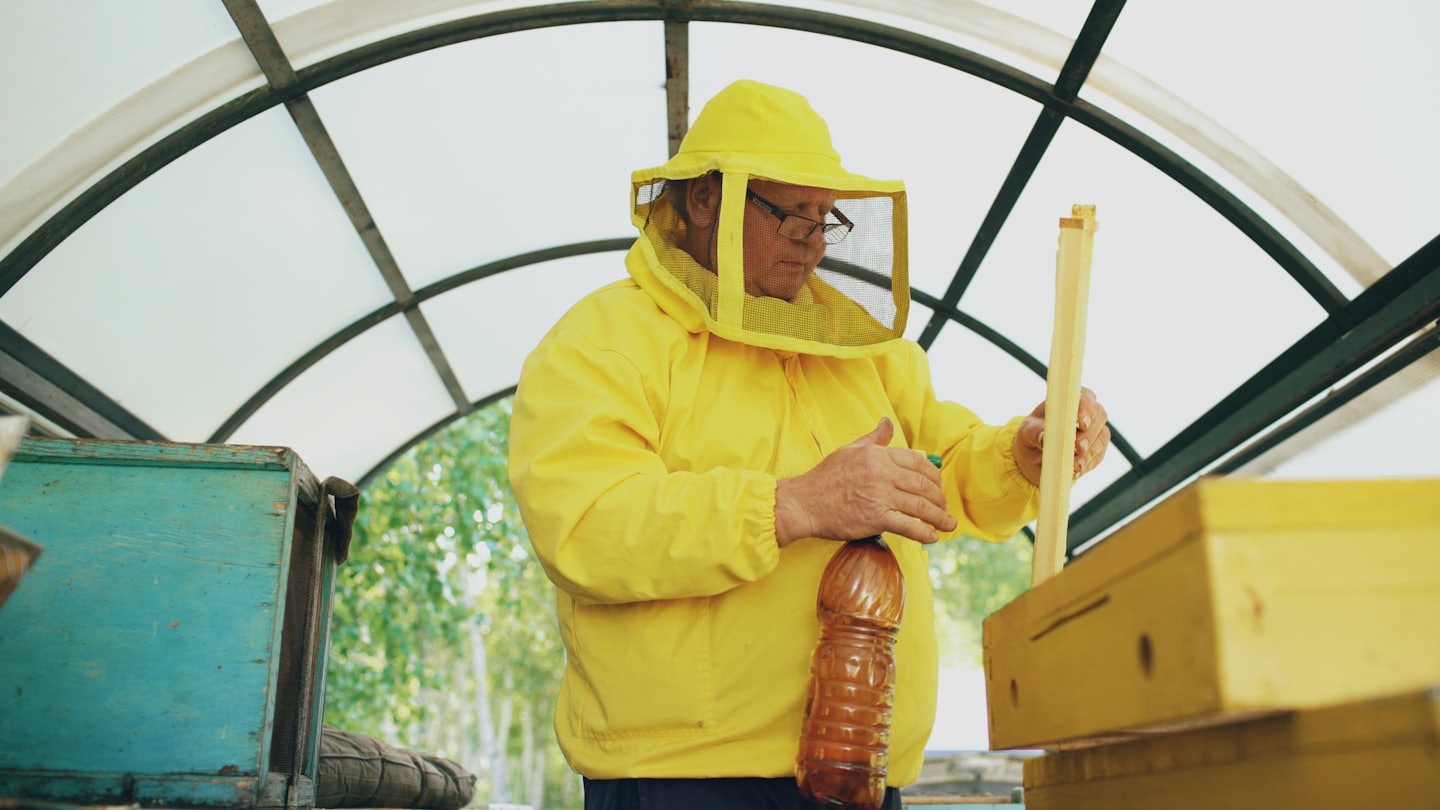
Choosing the perfect hive location
Select the hive design right for you and learn how to select a safe and productive site for your hive, ensuring optimal sunlight, shelter, and accessibility.
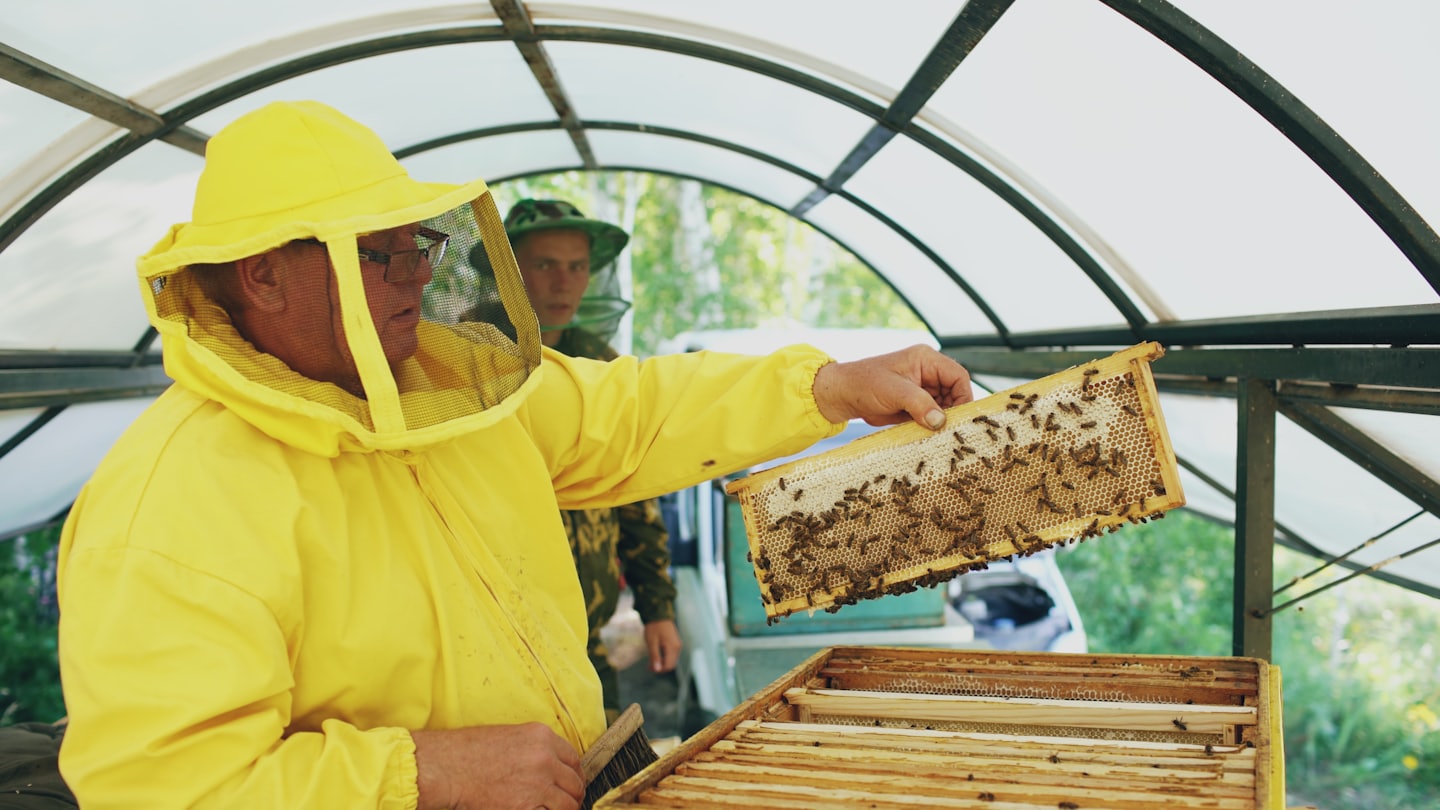
Essential beekeeping equipment
Not knowing what is essential when equipment is expensive can be daunting. Discover the key tools and protective equipment needed to manage your bees efficiently and safely from day one.
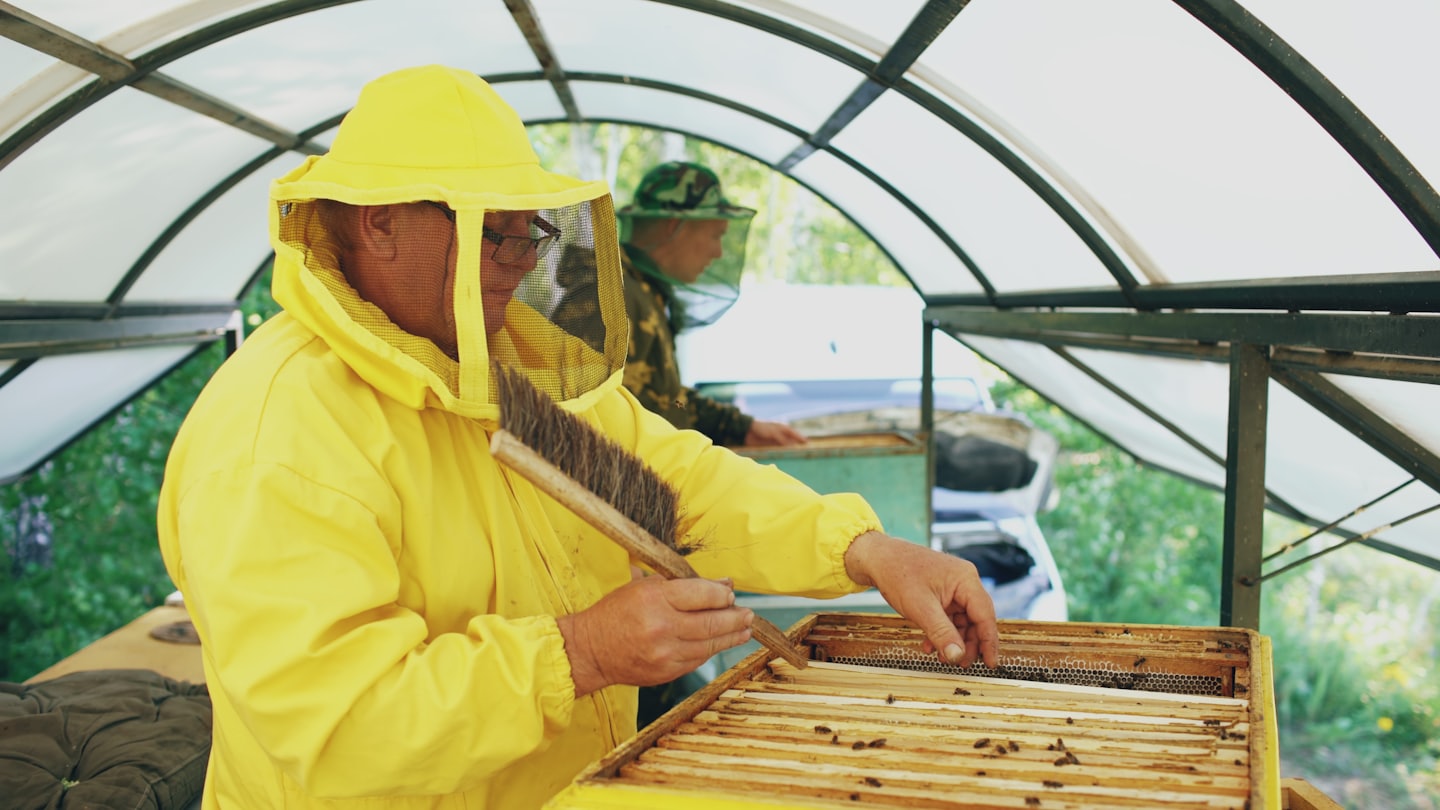
Your first bees & first year
Understand the options for obtaining bees, including nucleus colonies and swarms, to kickstart your apiary. Then follow us through a typical first year to understand what to expect.
We love keeping bees and hope you will too
Keeping honeybees offers significant environmental, personal, and economic advantages. This includes increased pollination for crops and gardens, production of sustainable, local honey and beeswax, and therapeutic stress relief through connecting with nature.
Beekeeping fosters conservation, provides educational insights into ecology, and offers potential income through selling hive products.

Harvesting Produce
Beekeepers can harvest, eat, sell or gift their own honey, with potential yields of up to 50kg per colony in good years – Bees also produce beeswax, which can be used for making candles or eco-friendly food wraps.
Sense of accomplishment
Nurturing a colony from spring through to winter offers a significant sense of responsibility and personal achievement.

Mental Health & Wellbeing
The calming, meditative hum of the hive and the focus required for inspections encourages mindfulness and acts as a stress-relieving, therapeutic hobby.
Community & learning
Joining local beekeeping associations such as Braintree Beekeepers allows for social interaction and continuous learning.

Connection with nature
Beekeeping forces a deeper connection with the environment and understanding of seasonal changes, which are fundamental to hive health.
Environment impact
Keeping bees is a direct contribution to conservation, helping to boost local biodiversity and supporting the pollination of gardens and local ecosystems.
Begin your beekeeping adventure here.
Find essential guidance and tips to help new beekeepers nurture thriving hives.

Hive Placement
Learn where and how to position your hive for optimal bee health.

Getting Your Bees
Understand how to acquire your first bees, from nucs to swarms.

Colony Management
Master the basics of caring for and maintaining your bee colony.
Begin your beekeeping adventure now
Ready to start your beekeeping journey? Join our Introduction to Beekeeping course and gain the confidence and knowledge to nurture your hive successfully. Enrol today and become part of a supportive community passionate about bees.
Selecting and siting your first hive
Before buying your first hive, we suggest connecting with your local beekeepers association to find out which style is most common amongst current members. Having neighbours or a mentor who use the same equipment makes borrowing spare parts and getting hands-on advice vastly easier.
In Essex we face a specific climate of warm, dry summers balanced by damp, windy winters, along with dense honeybee and wasp populations. Choosing the right hive design requires balancing these environmental factors with your physical lifting capacity.
In the UK, a standard Modified National Hive made of cedar is a common choice. It is the most popular, easiest to manage, and offers the best compatibility for sourcing parts and joining local beekeeping networks in your area.
Here are the key aspects to consider for your design style:
- Modified National: The absolute gold standard for UK beekeepers. Its standardised design means parts are easily sourced, and there is a wealth of literature tailored directly to it.
- WBC Hive: Recognisable by its iconic, traditional appearance with a gabled roof and outer casing. While beautiful in a cottage garden, it is double-walled, making inspections slightly more cumbersome for beginners.
- Brood Box Size: Consider starting with a 14×12 brood box. Standard National boxes can sometimes be too small for modern, prolific bee strains, meaning the larger 14×12 style provides extra space for the queen to lay and increases winter survival odds.
As well as the design type, the following materials offer different options.
- Western Red Cedar: The industry standard for UK weather. It is naturally rot-resistant, requires no painting, and lasts well over 15 years.
- Avoid plastic or polystyrene as a beginner, unless you live in a particularly cold or exposed part of the UK (like Northern Scotland). Wood offers better breathability, which is essential for managing the UK’s damp, high-humidity winters.
Roof Style options include Flat vs. Gabled.
- Flat Roof: Highly favoured across the UK. It is typically covered with a single piece of galvanized metal, making it completely waterproof. It is also easier to stack equipment or place hive tools on top during inspections.
- Gabled (Apex) Roof: Aesthetically pleasing but requires precise construction to ensure rainwater does not seep into the apex join.
Essential hive accessories to consider include:
- Open Mesh Floor: Critical for the British climate. It helps with ventilation and allows you to monitor varroa mite drops without disturbing the bees.
- Crown Board and Rapid Feeder: Make sure your crown board has clear feed holes so you can place a rapid feeder on top. This is necessary to help your new colony build their initial wax combs.
- Ratchet Straps: UK weather can be notoriously windy. You will need a simple strap or brick on the roof to ensure the hive does not topple over in gale-force winds.
The pros and cons of the main hive designs highlight distinct considerations.
1. Modified National (Standard & 14×12)
This is the most common hive across Essex, featuring single-walled wooden boxes with short, top-bee-space lugs.
- Pros: Parts are completely standardized and cheap. You can easily buy local bees on National frames from nearby Essex breeders. The 14×12 deep variation provides a large, single brood box that matches modern queen laying rates perfectly.
- Cons: A full 14×12 brood box is incredibly heavy to lift during inspections. Standard National boxes are often too small, forcing you to manage “brood-and-a-half” setups (two stacked boxes), which doubles your inspection time.
2. WBC (Traditional Cottage Hive)
The classic British hive seen in postcards, featuring an inner hive protected by an iconic, tiered outer wooden casing.
- Pros: The double-walled design offers excellent insulation. This keeps bees cooler during hot, dry Essex summers and dryer during damp winters. It looks beautiful in a garden.
- Cons: You must lift the outer lifts (casings) off before you can even begin inspecting the bees. This makes colony management highly tedious. The extra wood makes them expensive and completely impractical if you ever need to move your hives.
3. Poly National (Polystyrene)
A modern take on the National design made from high-density, molded plastic foam instead of wood.
- Pros: Exceptional thermal performance. Bees consume less food staying warm during winter, and colonies build up much faster in early Essex spring weather. The boxes themselves are incredibly lightweight.
- Cons: Woodpeckers can easily destroy them in rural Essex woodland areas unless painted with tough exterior masonry paint. They are prone to internal condensation if your ventilation isn’t managed perfectly. They cannot be scorched with a blowtorch to sterilize them against diseases.
4. Commercial or Langstroth
Large, single-walled hives with larger frame dimensions. The Langstroth is the global standard, while the Commercial is a British variant that shares the National footprint.
- Pros: Massive brood area in a single box. This severely reduces the bees’ impulse to swarm, which is a major benefit in populated Essex suburban areas.
- Cons: They are completely non-standard in the UK. Sourcing compatible parts, buying local nucleus colonies, or getting help from a mentor at an EBKA Divisional Apiary is much harder because almost everyone else uses Nationals.
Siting your beehive in the perfect location ensures your colony stays healthy, productive, and easy to manage.
Position your hive in a secure, level, and well-drained spot that offers morning sun to get the bees foraging early. Ensure it receives some afternoon shade to prevent overheating in the summer.
Sun and wind exposure
- The Morning Sun: Face your hive entrance toward the South or Southeast. This allows the early morning rays to hit the entrance, warming the bees up and getting them out to forage sooner.
- Avoid Overheating: In very hot conditions, afternoon shade is highly beneficial to prevent honeycombs from softening and to keep the bees from burning vital energy cooling the hive.
- Windbreaks: Bees struggle in heavy winds. Place your hive in the lee of a wall, hedge, or fence to protect the colony from the prevailing winds.
Moisture and ground conditions
- Elevate the Hive: Never place a hive directly on the grass or soil. Use a sturdy stand to elevate it by as this protects the bottom of the hive from ground moisture, dampness, and wood rot.
- Tilt Forward: When placing your hive, ensure it is completely level from side to side, but has a slight tilt leaning forward. This allows any rainwater or condensation to drain out the entrance rather than pooling inside.
- Keep Ground Clear: Clear the area under and around the stand of tall weeds and grass, which can block hive ventilation and harbor pests.
Accessibility and safety
- Keep It Convenient: Beekeeping involves lifting heavy boxes of honey, so make sure you have a clear pathway to your hive that you can easily reach with your equipment.
- Worker Space: Leave ample space (ideally 1 to 2 meters) behind and to the sides of your hive so you have room to comfortably stand and work without blocking the flight path.
- Flight Path: The bees will stream in and out of the front of the hive. Orient the entrance away from high-traffic pedestrian areas, children’s play areas, or your neighbour’s property line. If needed, use a tall fence or hedge to force the bees to fly up and over head-height.
- Predators: Elevating your hives also helps deter ground-dwelling predators like badgers, which like to scratch at the front of a hive to eat bees.
Water and forage
- A Nearby Drink: Bees need a constant water source to dilute honey and cool the hive. Provide a bird bath, shallow water bowl, or pond with stones or floating platforms. This keeps them from drowning or seeking out a neighbour’s swimming pool.
- Local Forage: While bees can forage over a 3-mile radius, situating your hive near flowering trees, shrubs, and wildflowers will maximise their honey production.