
Identify and treat key pests and diseases threatening your hives
Welcome to the Braintree Beekeepers’ dedicated page on pest and disease control.
To maintain strong, productive colonies, it is essential you monitor your hives regularly throughout the year and understand the statutory requirements for reporting diseases in England. Here we outline how to identify the most common diseases and to recognise and manage pests in your hive.
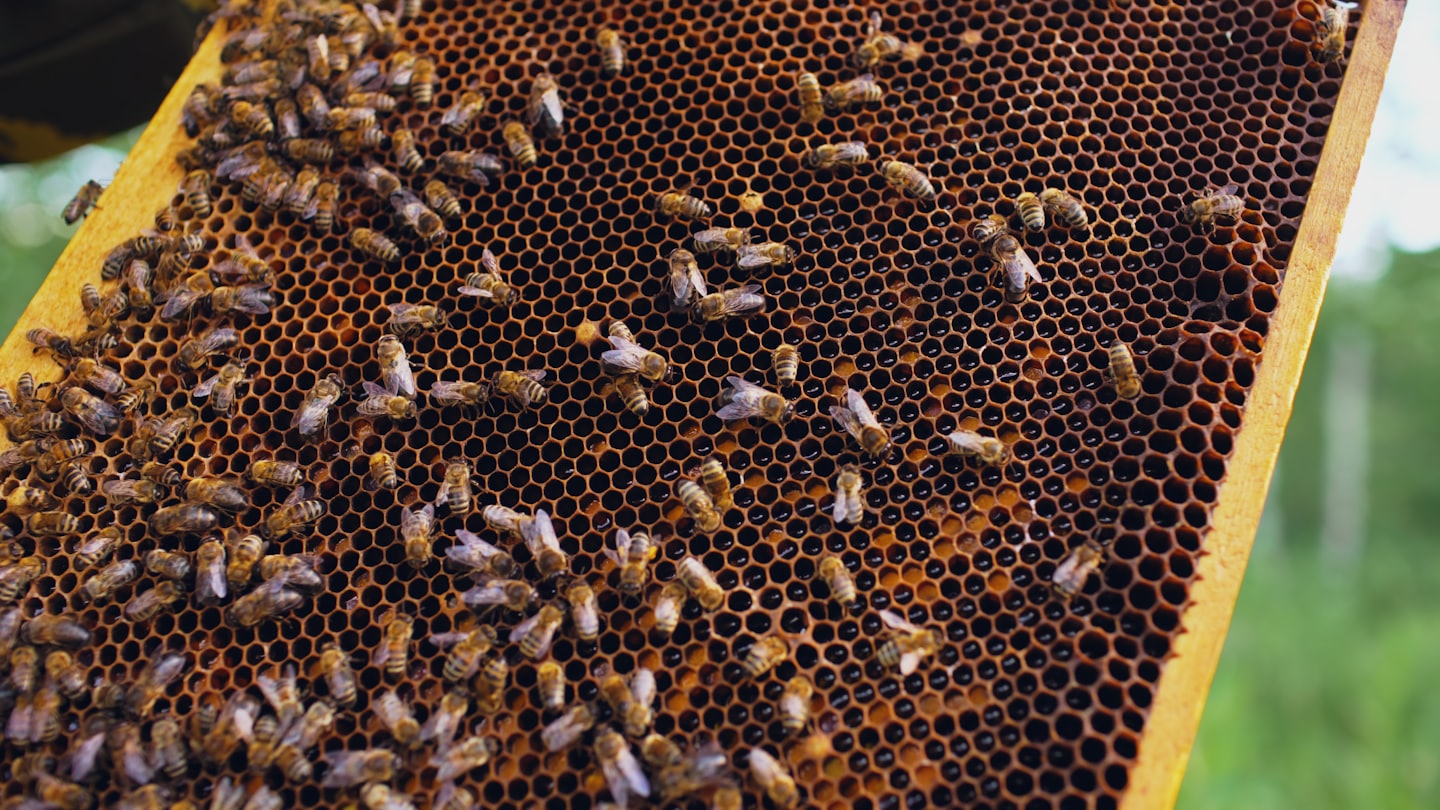
Apiary best practice guide
Best practice for disease and pest control focuses on rigorous hygiene, integrated pest management (IPM), and regular monitoring of hives within an apiary.
Change comb
Replace around a third of your brood comb annually to reduce pathogen buildup.
Tool sanitisation
Use a blowtorch on hive tools or a washing soda solution.
Prevent robbing
Do not leave honey-covered frames out in the open after harvesting as this attracts bees from other nearby colonies and wasps.
Avoid cross-contamination
Wash gloves and hive tools in a washing soda and bleach solution between visiting different apiaries to prevent cross-contamination. Also, avoid swapping frames, supers, or equipment between hives to stop the spread of American foulbrood or European foulbrood.
Quarrantine
Isolate new colonies or equipment for one season before introducing them to your main apiary.
Regular inspections
Perform regular, thorough inspections for signs of disease (eg uneven brood patterns, larvae discoloration, smell) and report any suspected notifiable diseases (eg foulbrood, small hive beetle) to the National Bee Unit immediately.
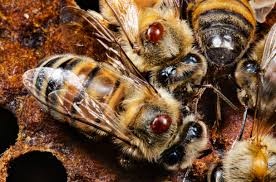
Verroa
The Varroa destructor (Verroa) mite is an inevitable pest in the UK and is best addressed using an integrategrated approach, recognising that mite populations peak in late summer.
Photograph © Mark Moffett / Minden Pictures
Key signs: Mites on bees, deformed wings and a high mite drop.
Thresholds: Treat if daily mite drop > 10–15 in summer, or if infestation > 3%.
Monitoring: Requires constant monitoring. Use a mesh floor with a white tray to perform a 7-day drop count or use the icing sugar shake method on a sample of approximately 300 bees.
Mechanical: Drone brood removal (can reduce mite population by ~50%),
Organic Acid: Oxalic Acid (winter) or Formic Acid (eg VarroMed or Formic Pro).
Chemical: Thymol-based products (Apiguard) or Apivar strips (alternating to prevent resistance).
Critical: Do not treat during a honey flow.
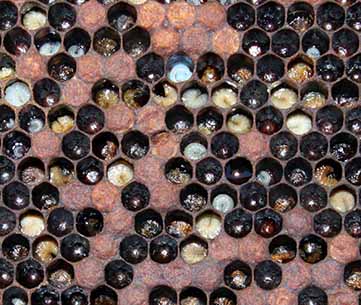
European Foul Brood (EFB)
European foulbrood (EFB) is a highly contagious bacterial disease that affects the larval stage of honey bees. Caused by the bacterium Melissococcus plutonius, the infection is spread when nurse bees feed contaminated food to young larvae.
Photograph © Rob Snyder, www.beeinformed.org
NOTIFIABLE. If you suspect you have EFB contact the Bee Inspector urgently.
Key signs: Patchy brood, twisted/yellow larvae, sour smell. Lavae not in a neat C-shape in the cell.
Test: The dead larvae are generally rubbery rather than ropy.
Treatment: EFB is sometimes treated with antibiotics or the “shook swarm” method by inspectors.
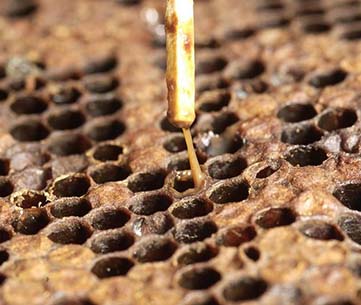
American Foul Brood (AFB)
American Foulbrood (AFB) is a highly contagious, fatal bacterial disease that affects honeybee brood (larvae and pupae). Caused by the spore-forming bacterium Paenibacillus larvae, it is widely considered the most destructive and widespread honeybee disease globally.
NOTIFIABLE. If you suspect you have AFB contact the Bee Inspector urgently.
Key signs: Sunken, greasy looking and perforated cappings, ropy/dark larvae, fishy smell.
Test (Matchstick Test): Larval remains are sticky and form a string (rope) 1-2cm long when pulled out.
Destruction: AFB confirmed colonies must be destroyed by burning, as spores last for decades.
Other potential threats
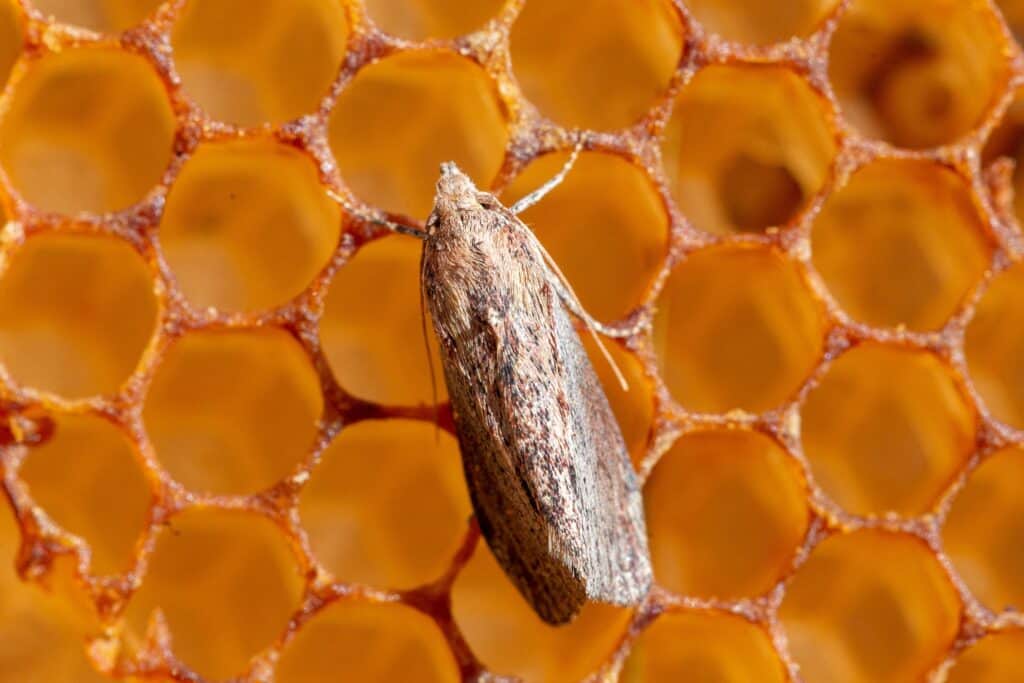
Other potential threats to honeybee colonies in the UK include the Wax moth, Nosema and (increasingly) the Yellow Legged Hornet.
Wax Moth: Keep colonies strong as they can usually manage moths and their larvae. Outside of the vive, store supers in containers with airflow and cold temperatures and freeze used brood frames to kill and larvae.
Nosema: A difficult to identify bacterial disease, only identified definitively by microscopic inspection. Symptoms may include: yellowish-brown fecal staining on the front of the hive, top bars, and combs, a sudden or gradual decline in adult bee populations in early spring; worker bees crawling near the hive entrance unable to fly, often with disjointed or “K-wing” wing positions. Infected bees may appear bloated or greasy-looking – Old comb must be replaced to avoid further infection.
Yellow Legged Hornet: Vespa velutina is a threat. Report sightings via the Asian Hornet Watch App as detailed in our guide to the Yellow-Legged Hornet.