
The Shook Swarm technique
Generally reserved for specialised circumstances such as disease management, here we explore the technique and key benefits of the Shook Swarm method for healthier, more resilient bee colonies – The shook swarm technique (or shakedown method) is a beekeeping management practice where all bees are shaken from their old comb onto new frames of foundation.

Disease control
Effective in the control of European foulbrood, and other diseases by renewing the hive’s brood combs.

Colony strengthening
Promoting vigorous colony growth by providing fresh combs and reducing pathogen loads for enhanced productivity.

Optimal timing and technique
We guide you through the best seasonal timing and step-by-step method to ensure successful implementation.
Frequently Asked Questions (FAQs)
When is the best time to perform a Shook Swarm?
Early spring after the first inspection is the ideal time for a Shook Swarm to ensure colony strength, but it can be done up until mid-July in the UK, depending on location.
How do I prepare for a Shook Swarm?
Prepare by having new brood frames ready and ensuring the colony is calm for a smooth process.
What are the benefits of a Shook Swarm?
Trials have shown that shaking bees onto new foundation and then destroying the old combs can be beneficial when controlling European foulbrood and may also be useful in controlling other health risks including Nosema, chalk brood and Varroa mite populations.
Colonies treated in this way often become the strongest and most productive in an apiary. Some beekeepers are now using this system to replace all the old brood combs in a beehive within a single procedure.
Can I perform Shook Swarm multiple times a year?
As a highly stressful technique, it’s best limited to once a year in the Spring to allow the colony to stabilise properly – Building comb is incredibly expensive metabolically. Repeating the process will therefore deplete vital winter stores. The process also removes all existing brood, throwing the hive into a dangerous broodless period.
Will the colony be weaker after a Shook Swarm?
Initially, colony strength dips but colonies should quickly rebuild on fresh combs, leading to healthier bees.
What equipment is needed for a Shook Swarm?
No specialised equipment is needed. You’ll need new brood frames with foundation, a queen excluder, and your normal protective equipment and smoker for safe handling.
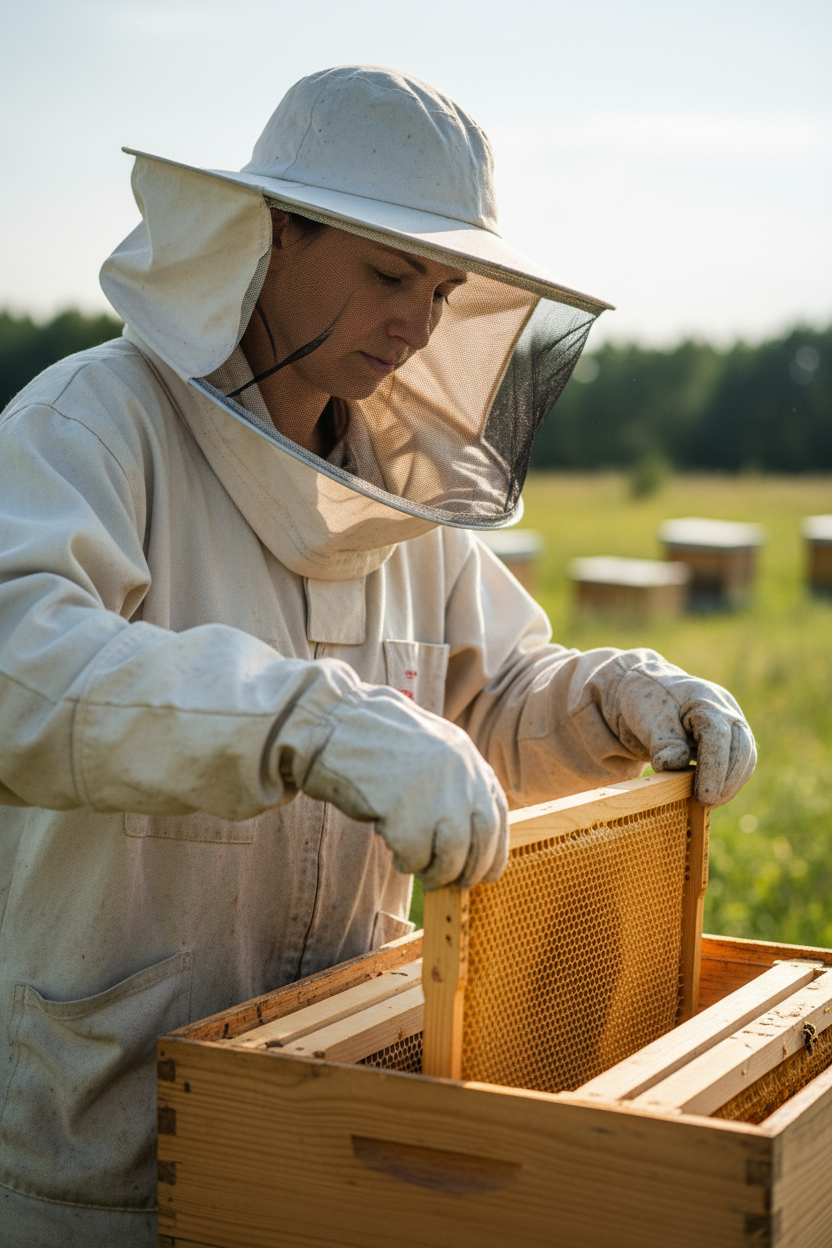
Preparation
Prepare a clean brood chamber filled with new (or sterilised) frames of foundation, a clean floor, crownboard and queen excluder.
Move the hive that you intend to shake to one side and place the clean floor on the original hive site.
Put a queen excluder over the new floor and then place the clean brood box containing frames of foundation on top of the queen excluder.
Remove the centre four frames and put them to one side. Flying bees will arrive at this new chamber.
Examine the old brood chamber and find the queen using one of the methods detailed below.
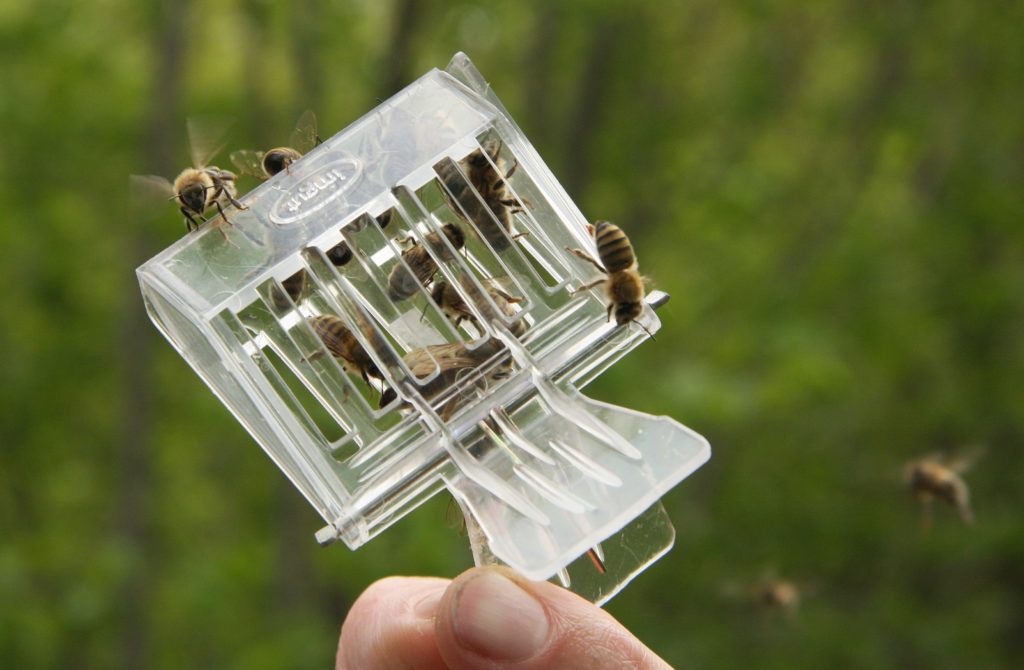
https://commons.wikimedia.org/w/index.php?curid=61954920
Finding the queen
If you have found (and isolated) the queen, proceed to the next step, otherwise place another excluder over the ‘clean’ brood chamber with an empty super on top. This will act as a funnel to stop bees from bearding over the side of the brood chamber.
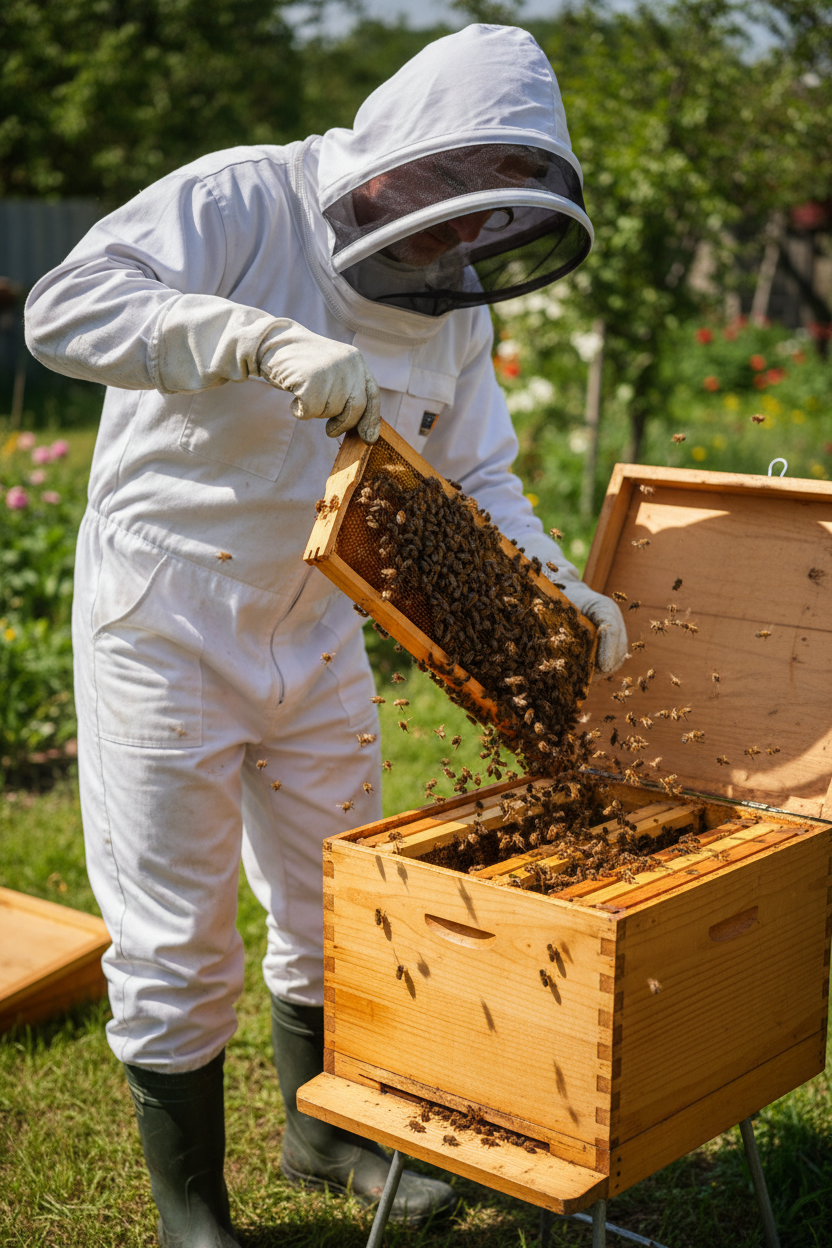
Shake each frame of bees onto the new supered (upper) brood chamber until all of the old combs are free from bees.
Shake and carefully brush bees remaining on the old equipment onto the supered brood chamber.
Lightly smoke the bees down into the clean chamber; in most cases the bees will crawl through the excluder and should leave the queen behind for you to pick up. If not, check the old chamber and floor for her until she’s found and isolated.
Isolating the queen will ensure she is protected during the shaking process.
After locating the queen
After seperating the queen, maintain feeding until all combs are drawn out (check carefully at this point as end-combs may need to be turned around or moved one frame into the chamber) – This is because bees find it hard to cluster and create wax on frames adjacent to the side of the brood box.
Note – In the case where EFB has been confirmed, the old combs and frames must be destroyed.
Place the located queen between the frames of foundation in the new box, or in a queen cage so that she can be released into the new chamber after you have completed shaking the bees.
Shake all the bees from the old combs into the new chamber – This is done by holding a frame of bees about one third of the way into the gap left between the foundations in the clean chamber. The frame is then moved quickly downward and suddenly stopped (avoid jarring the comb against the chamber). The bees will fall off the comb and any remaining on the comb can be gently brushed off.
Shake and brush bees on the old equipment into the new chamber. When all the bees have been shaken into the new brood chamber replace the frames of foundation that were removed and put the crown board in place.
Unless there is a strong nectar flow, feed with ‘heavy’ (2:1) sugar syrup – It may be beneficial to delay feeding for two days. In this way any contaminated nectar carried by the bees is used in comb building.
After about a week when brood is present, remove the queen excluder and sterilise it appropriately